

Most WordPress developers who build directory sites gravitate toward the same categories: local businesses, restaurants, job boards, real estate. Those verticals work – but they also have incumbents with years of domain authority and millions of indexed pages behind them. Ranking in them from a standing start in 2026 is a genuine uphill effort.
Table of Contents
The more interesting question is where that same effort – applied to a different niche – would compound instead of stall.
There are several directory niches right now where search demand is measurably building, the supply side is fragmented across forums and social media, and no dominant platform has claimed authority yet. The technical work of building a directory in WordPress is the same regardless of niche. The difference is whether you are building into a crowded space or a gap.
This article covers four of those gaps, with the reasoning and data behind each one.
What Makes a Niche Worth Building Into
Before the list, a brief framework worth applying to any directory idea.
A directory niche worth entering in 2026 has three characteristics. First, fragmented supply against high-intent demand: people are actively searching for something, but the providers or resources they are looking for are scattered across Reddit threads, Facebook groups, and individual sites with no aggregation layer. Google can surface individual results – it cannot curate or validate them.
Second, a trust problem. The higher the stakes of a wrong choice, the more a moderated, reviewed directory earns its place. Niches where users can be misled, defrauded, or simply let down by poor information are niches where a trustworthy platform commands both attention and recurring revenue.
Third, willingness to pay on the supply side. Businesses and professionals who already spend on lead generation – Google Ads, industry events, paid listings elsewhere – will pay for a directory that delivers qualified traffic. If the providers in a niche have no marketing budget and no history of paying for discovery, monetisation is structurally harder regardless of how well-built the directory is.
All four niches below meet these criteria.
1. Vetted Immigration and Relocation Services
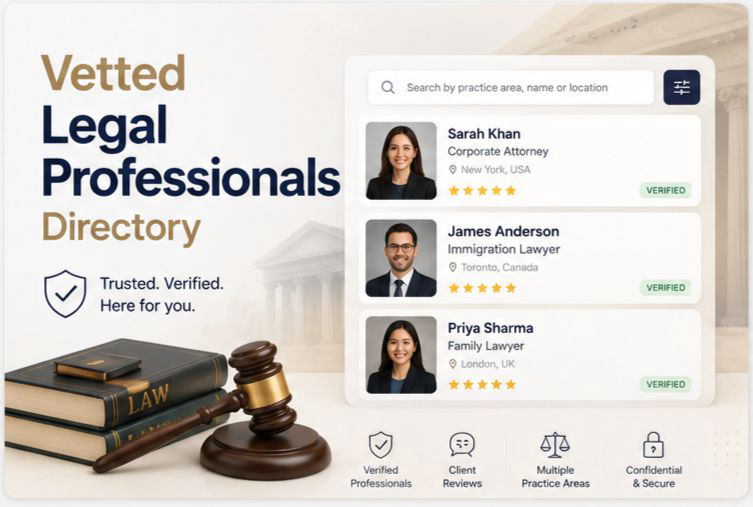
After the 2024 US election, Google searches for international relocation spiked by over 1,500%, according to VisaGuide.World. Relocation platform moveBuddha reported an 854% surge in traffic to its international moving content within two days of the result. Those peaks settled – but the underlying demand did not. Search volume around queries like “immigration lawyer [country]”, “relocation consultant”, and destination-specific searches such as “moving to Portugal” or “digital nomad visa” has remained persistently elevated above pre-2024 levels.
The trust problem in this niche is significant. Immigration is high-stakes, fraud is common, and the difference between a competent and an incompetent service provider can mean years of delays or financial loss. Users are not browsing casually – they are trying to make a decision they cannot easily undo.
What does not currently exist is a directory that combines verified credentials, authentic reviews, country filtering, language-matching, and service-area scope in one structured, searchable place. Yelp and Google Maps are not built for cross-border service discovery. Martindale-Hubbell covers legal professionals broadly. The specific intersection of immigration and relocation services, curated and filterable, is genuinely unoccupied.
On the revenue side, immigration lawyers already pay some of the highest Google Ads CPCs in any professional services category. A directory that delivers motivated, pre-researched leads has a clear and immediate value proposition for listing owners.
What to build: Listings filterable by destination country, language, service type (visa applications, relocation logistics, tax advisory), and credentials. Admin approval workflow and document verification fields are non-negotiable for trust. Directorist handles both natively, including custom fields per listing category and built-in moderation tools.
2. AI Agent Builders and Automation Specialists

Businesses across every sector are actively trying to deploy AI agents – systems that handle full workflows autonomously, from customer service pipelines to internal data processing. The agentic AI market is projected to grow from $9.14 billion in 2026 to over $139 billion by 2034, according to Grand View Research. The bottleneck is not awareness or budget. It is finding the right people to build these systems.
Discovery is currently poor. Upwork and Fiverr have relevant freelancers, but the signal-to-noise ratio is low and there is no specialist vetting infrastructure. LinkedIn requires extensive manual searching and gives no indication of actual capability. No directory exists specifically for people who build AI agents, LLM-powered workflows, and automation systems for business use.
The audience searching for these specialists is not price-sensitive. A business deploying an AI agent to handle a core operational process is making a significant commitment, and they will pay for access to reviewable, vetted specialists over generic freelancer search results.
The window to build authority in this niche is narrow. As the category matures and more players recognise the gap, the cost of establishing domain authority increases.
What to build: Listings filterable by platform expertise (n8n, Make, Zapier, OpenAI, Claude API, LangChain), industry experience, project type, and engagement model (project-based vs. retainer). Portfolio verification and client reviews are the trust layer that distinguishes this from another freelancer directory.
3. Halal-Certified Products and Services
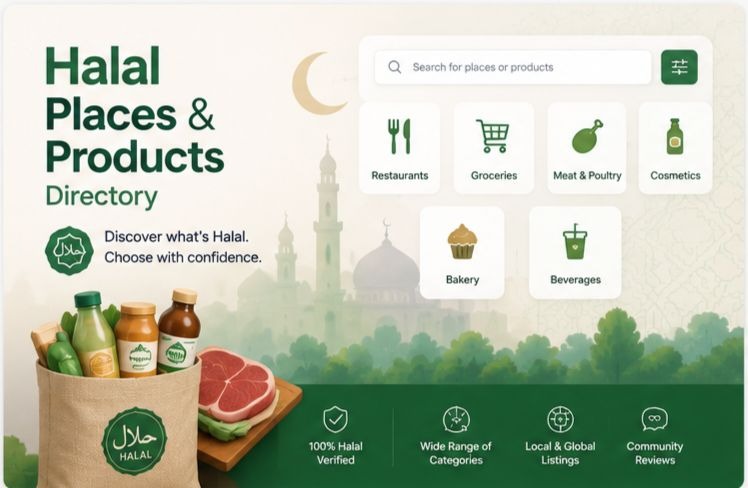
The global halal economy spans food, cosmetics, pharmaceuticals, finance, travel, and professional services. Muslim consumers represent approximately 1.8 billion people worldwide, with a significant and growing purchasing base across the UK, US, Canada, France, Germany, and Australia. This is not a niche audience in any conventional sense – it is a large, consistent, and demonstrably underserved one.
The trust problem here is acute. Halal certification varies by certifying body, country, and product category. Consumers cannot rely on packaging or self-reported claims alone. Mainstream platforms like Google Maps and Yelp do not filter by certification status. Discovery currently happens primarily through word-of-mouth, community WhatsApp groups, and a fragmented set of region-specific apps with limited geographic coverage.
A directory that filters by certifying body, product or service category, and geography – and validates listings through certification documentation – solves a real problem for a large and actively searching audience. The commercial opportunity is substantial: restaurants, food manufacturers, halal cosmetics brands, and Islamic financial product providers are all actively seeking platforms that can reach a self-selected audience of halal-conscious consumers.
What to build: This is a strong candidate for WordPress’s multi-directory approach. Running halal restaurants, halal cosmetics, halal travel services, and halal financial products as separate, correctly categorised directories on a single install keeps the user experience clean and the SEO structure logical. Custom fields for certification body and expiry date are the critical data layer.
If you’re starting from scratch, here’s a step-by-step guide on how to create a directory website in WordPress that covers the full setup without needing a developer.
4. Sober-Friendly Venues and Experiences
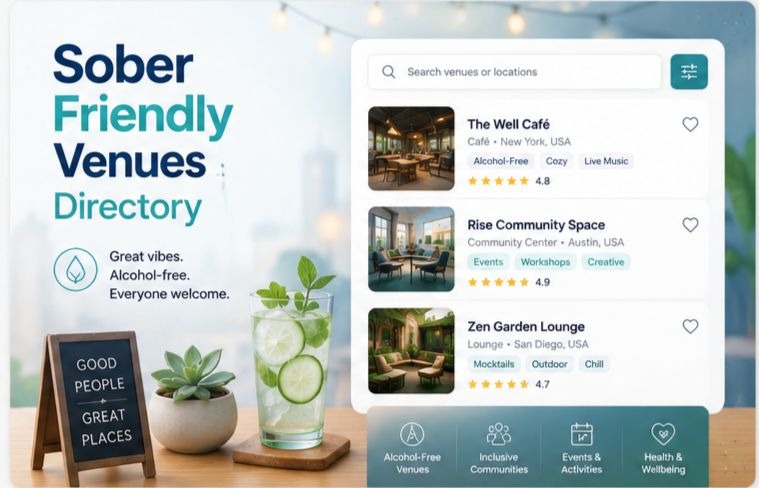
This one is less obvious, but the demand signal is clear and consistent. According to NCSolutions, 49% of Americans plan to drink less alcohol in 2025 – a 44% increase since 2023. Among Gen Z specifically, 65% plan to cut back, and 39% intend to go alcohol-free for the full year. Dry January participation grew 36% year over year. The non-alcoholic beverage market is projected to grow by $281 billion between 2024 and 2028, according to PR Newswire.
This is a sustained three-year directional shift, not an annual resolution cycle. And it has created a discovery problem that no platform is currently solving.
Someone who does not drink – whether sober, sober-curious, pregnant, in recovery, or simply preferring it – has no reliable way to find bars, restaurants, cafes, events, and travel experiences that genuinely accommodate them. What exists is a handful of city-specific blog posts, Instagram accounts run by individuals, and occasional “mocktail menu” tags buried in general review platforms that may or may not be current. There is no searchable, filterable, trusted directory for this audience.
The trust problem matters here too. A “sober-friendly” listing that turns out to have a two-drink minimum, or an alcohol-free event that serves alcohol, damages credibility immediately with an audience that often navigates social situations carefully. A directory that gets this consistently right earns loyalty that a general review platform never could.
Venues, experience providers, and non-alcoholic beverage brands actively targeting this audience are already spending on marketing. A directory that delivers a self-selected, high-intent audience of non-drinkers is a compelling platform for that spend.
What to build: Listing categories spanning venues, events, and travel experiences with custom fields for alcohol policy, mocktail menu availability, and atmosphere type. Community reviews are the core trust mechanism for this audience specifically.
The Underlying Pattern
Each of these niches shares the same structure: there is a large and motivated audience searching for something, the supply is scattered and hard to discover, and the trust problem makes a curated platform significantly more useful than a raw search results page.
The directories that will own these spaces in three years are almost certainly being built now. The technical barrier to building a well-structured WordPress directory – custom fields, geo-filtering, review systems, payment processing, listing moderation – is lower than it has ever been. Plugins like Directorist handle that infrastructure out of the box, including multi-directory support on a single WordPress install, which is useful if you want to run related categories without fragmenting your domain.
The harder part is the domain knowledge and editorial judgment to know which niche to enter and how to build trust within it. If one of these matches a community you are already part of, that familiarity is the actual competitive advantage. We covered all six niches in full detail, including the monetisation case and build recommendations for each, in this breakdown on the Directorist blog.
