

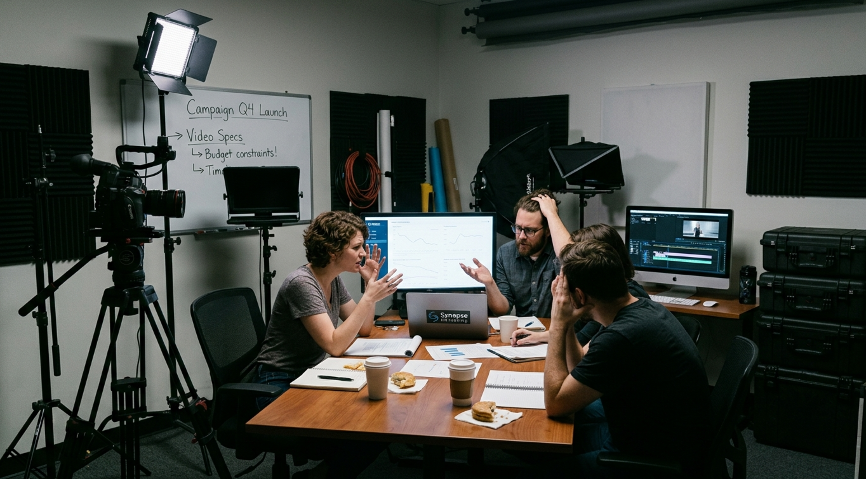
Marketing teams are producing more video than ever, but most still follow outdated workflows. They brainstorm ideas, write scripts, hire creators, edit footage, and finally publish. By the time the video goes live, the opportunity has often passed.
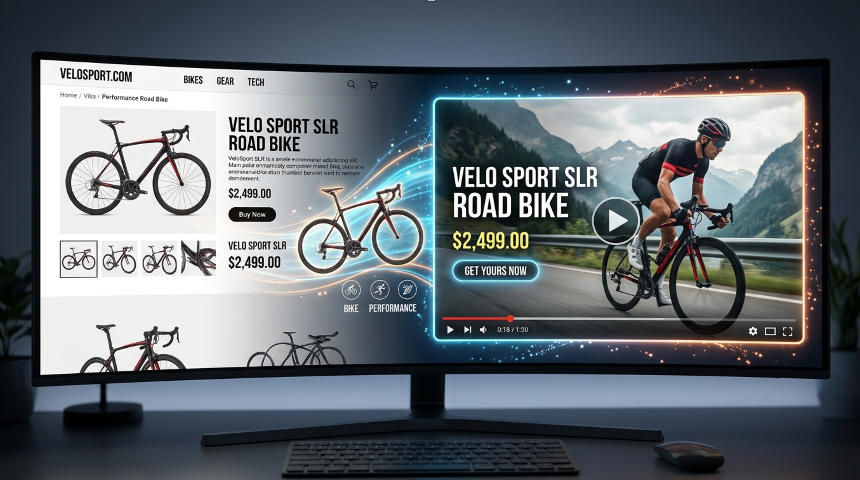
The faster alternative: start with what already exists. Product pages, blog posts, and landing pages contain structured information that AI can convert directly into video. No creative briefs required.
What Makes URL-Based Video Generation Different
Traditional video production treats each project as unique. Every video needs its own concept, assets, and execution plan. That works for big campaigns but breaks down at scale.
An AI Link to Video generator like Topview’s that accepts URLs flips the model. Instead of building each video manually, you feed the system a link and let it handle assembly. Powered by advanced text-to-video and image-to-video models like HappyHorse 1.0, the AI website tool reads the page, identifies key elements, and structures them into a watchable format with fluid, cinematic motion generation.
What gets extracted:
- Product images and visual assets
- Headlines and feature lists
- Pricing and availability details
- Technical specifications
What gets automated:
- Script generation based on page content
- Visual sequencing and transitions
- Platform-specific formatting
- Voiceover generation
The output isn’t perfect, but it’s functional. And for performance marketing, functional beats delayed.
Where This Approach Delivers the Most Value
E-commerce Catalog Videos
Brands with large inventories face an impossible content challenge. Creating individual videos for hundreds of products manually isn’t feasible. A product to video generator solves this by processing entire catalogs in batch mode. Each product link becomes a video without human intervention.
Paid Social Testing
Performance advertisers need volume to find winning creatives. With Seedance 2.0, they can generate 20 variations from a single product page and test them simultaneously. Different hooks, angles, and calls-to-action get evaluated in real time. The best performers scale. The rest get retired.
Affiliate Content Production
Affiliates promote products they don’t own or stock. They can’t shoot demos or arrange photoshoots. URL to video tools let them create product content using only the merchant’s product page. The video feels native, even though the affiliate never touched the product.
Quick Campaign Launches
When a sale or promotion goes live, speed matters. Traditional video production can’t keep pace with flash sales or limited-time offers. AI video generation turns a promotional landing page into video ads in minutes, not days.
How Topview’s AI Video Generator Handles This
Topview built its system around speed and platform optimization. You input a product link, select your target platform, and generate. The tool adjusts pacing, aspect ratio, and messaging based on where the video will run.
Platform-specific adaptations:
- TikTok: Fast cuts, bold text, hook within 2 seconds
- Instagram Reels: Visual-first, lifestyle context
- YouTube: Longer format, detailed explanations
- Amazon: Feature-focused, trust signals prominent
The same URL produces different videos depending on context. This saves teams from manually reformatting content for each platform.
What This Workflow Looks Like in Practice
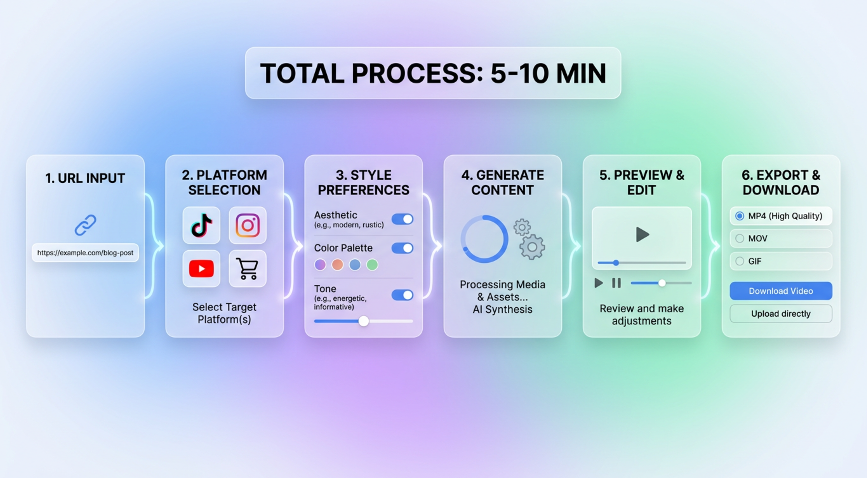
Step 1: Copy your product page URL
Step 2: Paste it into the AI Video Generator
Step 3: Choose platform and style preferences
Step 4: Generate and preview
Step 5: Make minor edits if needed
Step 6: Export and publish
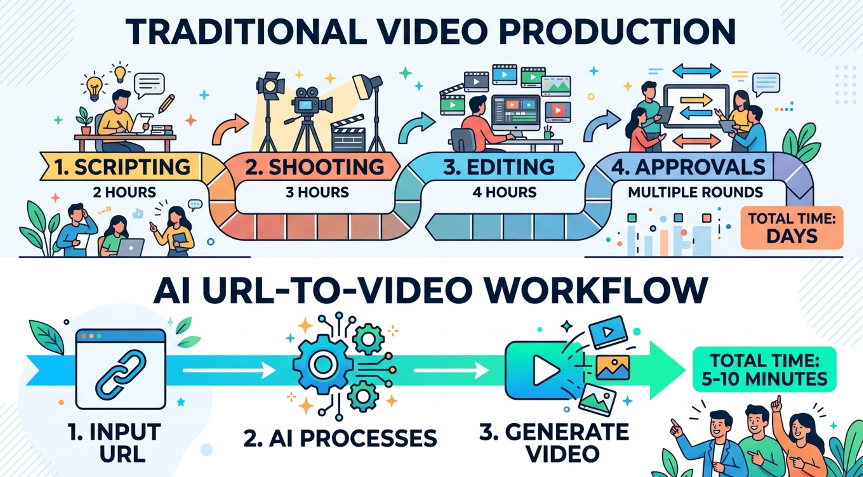
Total time: 5-10 minutes per video.
For comparison, traditional production might take:
- 2 hours for scripting
- 3 hours for shooting
- 4 hours for editing
- Multiple approval rounds
The time savings compound across dozens or hundreds of videos.
Limitations Worth Knowing
This method works best for product-focused content. Brand storytelling, testimonials with real people, and highly conceptual campaigns still benefit from traditional production.
The AI pulls from existing page content, so weak product pages produce weak videos. If your descriptions are vague or your images are low quality, the output reflects that. Garbage in, garbage out still applies.
Some brands worry about losing creative control. The reality is more nuanced. You trade control over production details for control over scale and speed. That trade-off makes sense in performance contexts but not everywhere.
The Shift in Creative Operations
Five years ago, video teams focused on craftsmanship. Today, the focus is iteration speed. The teams that produce more, test faster, and optimize continuously outperform those chasing perfection.
AI ad generator tools enable this shift. They turn video production from a creative project into an operational process. That doesn’t eliminate creativity but it does change where creative energy gets spent. Less time assembling footage, more time refining strategy.
Why This Matters Now
Content demand isn’t slowing down. Platforms reward consistent posting. Audiences expect video everywhere. Competitors are scaling production faster than manual workflows allow.
The URL to video approach removes the bottleneck. Product pages become video libraries. Blog posts become social clips. Landing pages become ad creative. Everything you publish in text can extend into video without rebuilding from scratch.
Topview’s tool makes this practical for teams of any size. Whether you’re a solo affiliate marketer or a global brand with thousands of SKUs, the workflow stays the same. Paste a link, generate a video, publish.
The question isn’t whether AI video generation works. It’s whether your team can afford to keep producing content the old way while competitors move faster.
